Accountability isn’t partisan. It’s patriotic.
Trump, Qatar, and a $400M Jet: A Gift That’s Raising Red Flags Across the Political Spectrum

What happens when a former U.S. president is linked to a $400 million luxury jet gifted by a foreign power with a controversial global track record? You get a political firestorm that’s drawing rare bipartisan concern and igniting deep ethical, constitutional, and national security debates.
Whataboutism: The Political Escape Hatch Undermining U.S. Democracy

Whataboutism thrives in a culture where political identity matters more than democratic principles. But if we want a country where truth, accountability, and justice matter, we can’t afford to treat bad behavior as acceptable just because someone else was bad too.
Trump’s First 100 Days – A Centralist’s Perspective

Donald Trump’s return to the White House has been marked by bold action and sharp course corrections. To his supporters, this is leadership in motion; to his critics, it’s reckless disruption. For independent centrists, the past 100 days have shown both decisive policy execution and real tensions around tone and governance. Still, there’s no question that Trump is delivering on the priorities that got him elected.
Don’t Expect More: How Leaders on Both Sides Have Lowered America’s Expectations
In a recent Cabinet meeting, President Donald Trump defended the economic impacts of his administration’s tariffs on Chinese goods, arguing that minor inconveniences like fewer toys for children could be acceptable trade-offs. He stated, “Maybe the children will have two dolls instead of 30 dolls. Maybe the two dolls will cost a couple of bucks more than they would normally.”
Let Them Eat (American) Cake

While some items like “Success” cologne and certain bedding are U.S.-made, a significant portion of Trump-branded merchandise originates from abroad, highlighting a contrast between his rhetoric and business practices.
The Erosion of Due Process: The Deportation of Kilmar Ábrego García
Process Over Person: The Case of Kilmar Ábrego García

Kilmar Ábrego García came to this country illegally in 2011 at the age of 16. Since then, Ábrego García has been accused of physical and verbal domestic abuse multiple times and is possibly a member, or former member, of the dangerous MS-13 gang. However, even bad guys and, yes, even illegal immigrant bad guys have rights under the United States Constitution.
When Due Process Breaks Down: The Deportation of Kilmar Ábrego García
In a case that has ignited legal and human rights debates across the country, Kilmar Ábrego García—a Salvadoran man who lived in the U.S. for over a decade—remains imprisoned in El Salvador after a deportation that violated a standing U.S. court order.
Why Political Journalism Needs Unnamed Sources—And Why “Everyone Is Saying” Isn’t One

In the high-stakes world of politics, access to truthful information often hinges on sources who are afraid to speak publicly. That’s why unnamed confidential sources remain a vital tool in political journalism.
Trump’s Tariff Policies Are Becoming A 20/80 Political Issue
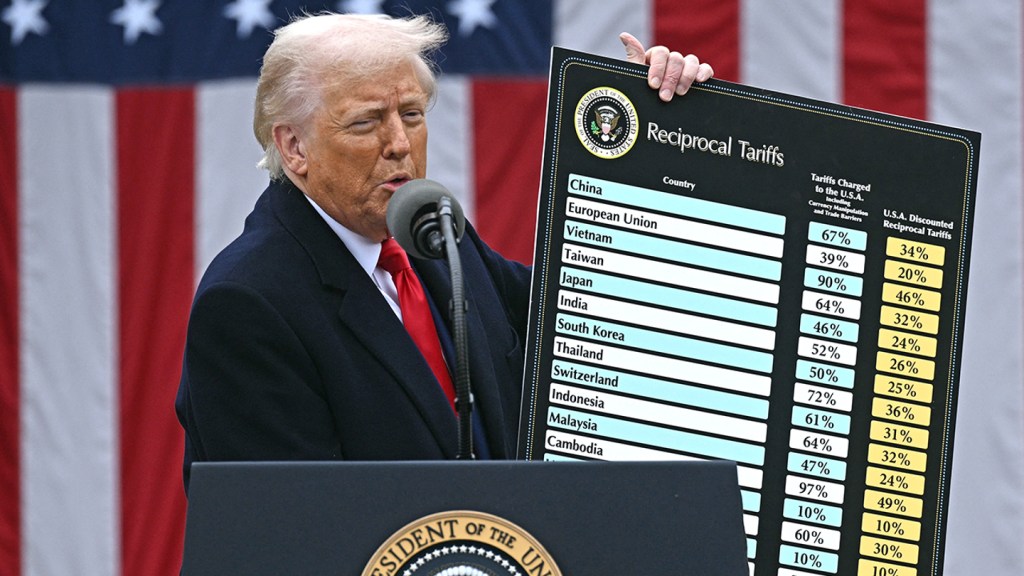
While President Trump’s tariff policies maintain support within his core base, they face growing opposition from the broader public due to concerns over rising prices and economic instability. So why are Republicans continuing to support the policies? Will they continue to support the policies if they become a true 20/80 issue?
The Perils of Being Just Political Opposition: What History and Today Teach Us
There has been a change in the Democratic Party as its leaders shift from trying to find common ground with Republicans to standing firmly against it. In any healthy democracy, opposition parties are crucial. They scrutinize power, challenge complacency, and offer voters choice. But when a political movement defines itself solely by what it’s *against*—without offering a clear, constructive alternative—it risks irrelevance, public distrust, and even national instability.
Gavin Newsom’s Continual Contradiction
Governor Gavin Newsom’s recent actions have raised concerns about his authenticity and trustworthiness as a potential presidential candidate. His podcast, This Is Gavin Newsom, features conversations with prominent conservative figures like Charlie Kirk and Steve Bannon. In the inaugural episode, Newsom agreed with Kirk that allowing transgender athletes to compete in women’s sports is “deeply unfair,” a stance that contradicts his long-standing support for LGBTQ+ rights.
Hijacking the Narrative: Laura Loomer and the Erosion of Independent Thought

In an era of fractured media and hyper-polarized politics, it’s becoming harder to think freely—and easier to react loudly. At the center of this shift are political figures who blur the line between activism and performance, pushing narratives designed more to provoke than to inform. Among them, Laura Loomer has emerged as a symbol of this new breed of political influencer—one whose tactics don’t just stir controversy, but distort the very foundation of independent political thought.
Cory Booker Wasted Everyone’s Time; Especially His Own
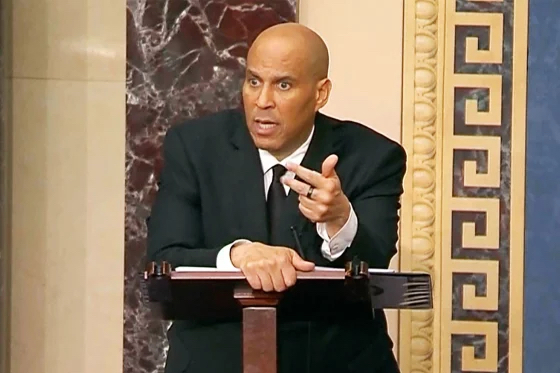
On March 31, 2025, Senator Cory Booker of New Jersey delivered a historic speech on the Senate floor that lasted 25 hours and 5 minutes, surpassing the previous record held by Senator Strom Thurmond in 1957. Booker initiated his address at 7 p.m. ET, aiming to protest President Donald Trump’s policies and the operations of Elon Musk’s Department of Government Efficiency.
 The Centerline Report